01229 585 778 | admin@ulverstoncouncil.org.uk
Ulverston Town Council Office, County Square, Ulverston, Cumbria LA12 7LZ

01229 585 778 | admin@ulverstoncouncil.org.uk
Ulverston Town Council Office, County Square, Ulverston, Cumbria LA12 7LZ


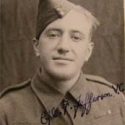
(18 August 1921 – 4 September 1982) was awarded the VC for his actions during the Battle of Monte Cassino in World War II.(18 August 1921 – 4 September 1982) was awarded the VC for his actions during the Battle of Monte Cassino in World War II.
Francis Jefferson was 22 years old, and a fusilier in the 2nd Battalion, Lancashire Fusiliers, British Army during the Second World War when the following deed took place for which he was awarded the VC.
On 16 May 1944, during an attack on theGustav Line, Monte Cassino, Italy, the leading company of Fusilier Jefferson’s battalion had to dig in without protection. The enemy counter-attacked opening fire at short range, and Fusilier Jefferson on his own initiative seized a PIAT gun and, running forward under a hail of bullets, fired on the leading tank. It burst into flames and its crew were killed. The fusilier then reloaded and went towards the second tank which withdrew before he could get within range. By this time, British tanks had arrived and the enemy counter-attack was smashed.[1]
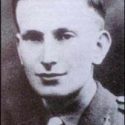
(3 January 1924 – 3 March 1945) was awarded the VC for his actions during the attack on Meiktila, Burma, on 3rd March 1945.
William Basil Weston was 21 years old, and a lieutenant[1] in the Green Howards (Alexandra, Princess of Wales’s Own Yorkshire Regiment),[2]British Army, attached to 1st Battalion, West Yorkshire Regiment during the Second World War when the following deed took place for which he was awarded the VC.
On 3 March 1945 during the attack on Meiktila, Burma, Lieutenant Weston was commanding a platoon which, together with the rest of the company, had to clear an area of the town of the enemy. In the face of fanatical opposition he led his men superbly, encouraging them from one bunker position to the next. When he came to the last, particularly well-defended bunker, he fell wounded in the entrance. Knowing that his men would not be able to capture the position without heavy casualties he pulled the pin out of one of his grenades as he lay on the ground and deliberately blew himself up with the occupants of the bunker.[3]
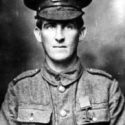
(17 January 1892 – 2 September 1974)
Harry Christian was awarded the VC for his actions at Cuinchy, France during the First World War.
His actions are commemorated at Pennington War Memorial, near Ulverston, when the a memorial stone was unveiled on Sunday 18 October 2015 by the Lord Lieutenant of Cumbria Mrs Shiela Hensman.
**
Harry Christian was 23 years old, and a private in the 2nd Battalion, King’s Own Royal Regiment (Lancaster), British Army during the First World War when the following deed took place at Cuinchy, France, for which he was awarded the VC. The citation, published in the London Gazette on 3 March 1916, read:
“For most conspicuous bravery. He was holding a crater with five or six men in front of our trenches. The enemy commenced a very heavy bombardment of the position with;heavy “minenwerfer” bombs, forcing a temporary withdrawal. When he found that three men were missing, Private Christian at once returned alone to the crater, and, although bombs were continually bursting actually on the edge of the crater, he found, dug out, and carried one by one into safety all three men, thereby undoubtedly saving their lives. Later he placed himself where he could see the bombs coming, and directed his comrades when and where to seek cover.”[1]
His Victoria Cross is displayed at The King’s Own Royal (Lancaster) Regiment Museum in Lancaster, England.